Category: Greenway Partners

  • Meet the Technical Team

    Meet the Technical Team

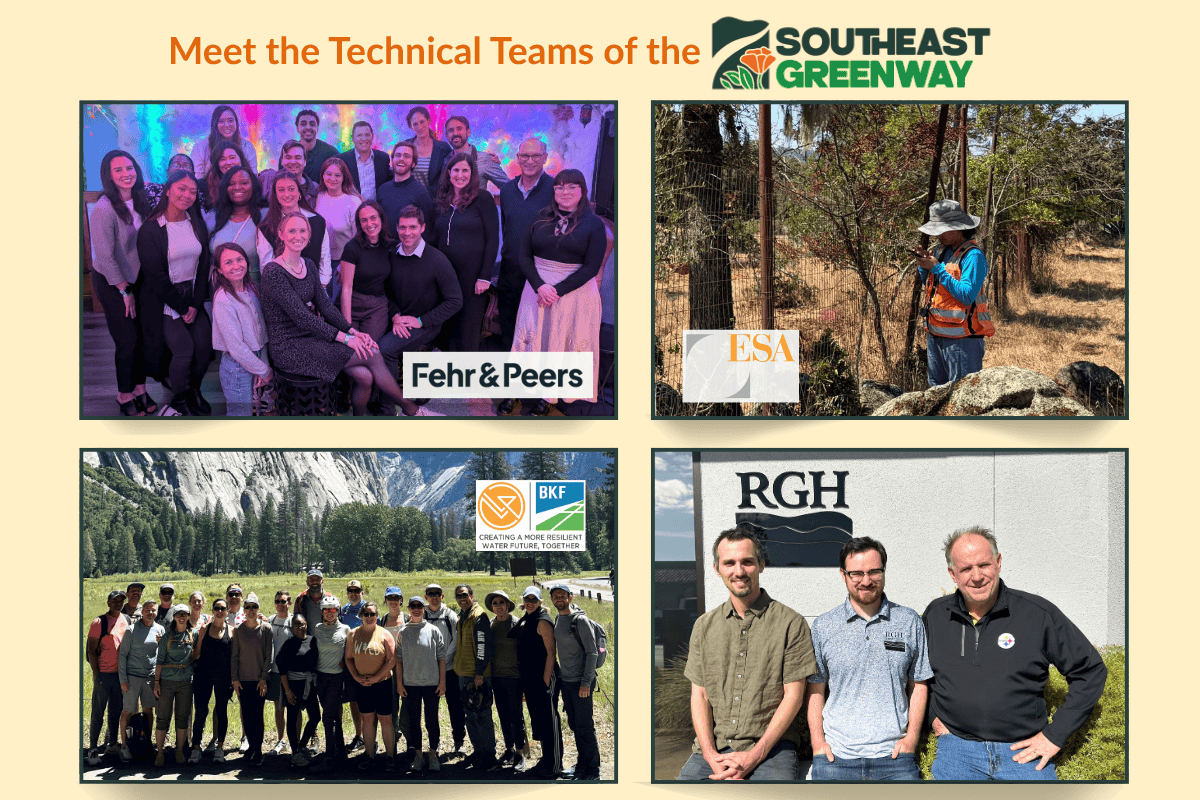
    Engineering and Technical Teams are an integral part of the master planning process after this initial community engagement phase concludes. These are the teams working on the assessment of existing conditions along the greenway and developing initial concepts exploring amenities and features for the park, which will eventually become part of the Preferred Master Plan and the start of the next phase of creating the Southeast Greenway park.  
     
    Fehr and Peers – Improving communities is at the heart of what Fehr & Peers does. As a transportation planning and engineering firm, they help create safer, more connected places for people to walk, bike, and move through their communities. With expertise in active transportation and trail corridor planning, they bring practical solutions that connect people and places. 

    Lotus/BKF – A civil engineering firm that integrates water cycle analysis with urban design, natural systems engineering, and civil engineering to create economically, environmentally, and socially balanced solutions. Their expertise in stormwater management and water resilience is a natural fit for projects like the Southeast Greenway, where parks and public spaces can do more than provide places to gather and recreate. Lotus/BKF helps communities make the most of these spaces by incorporating green infrastructure to reduce flooding, improve water quality, and build climate resilience while enhancing the public experience. 

    Environmental Science Associates (ESA) – ESA is an environmental consulting, planning, and design firm committed to sustainable landscape management, strong project management, interdisciplinary coordination, and technical depth. They apply these principles to park and open space master planning and restoration efforts that integrate equity-based community engagement, climate resilience, habitat and biodiversity stewardship, and implementable design strategies. 

    RGH Consultants – Many projects require planners, engineers, and others to understand the ground and materials they are working with. RGH Consultants provides in-depth analysis and insight enabling their clients to make better engineering and planning decisions. They have developed a comprehensive working knowledge of the soil and geologic conditions throughout the North Bay area, and specifically Santa Rosa, and a deep understanding of the performance of local projects after construction. 

    We’re excited to be partnering with these organizations on the technical team helping shape the Southeast Greenway Master Plan! 

  • Meet Our Artists  

    Meet Our Artists  

    Art-Based Community Engagement on the Southeast Greenway

    The Southeast Greenway project strives to break the mold when it comes to traditional community outreach. While classic workshops and surveys remain valuable, providing avenues for creative expression can unlock deeper insights into what the future park may become. Led by local artists, in partnership with Kimzin Creative, the creative teams will design engagements utilizing visual art, multimedia practices, and spoken word as ways to invite community members to share their experiences, hopes, and priorities for the Greenway. To design and facilitate nine upcoming workshops, Kimzin Creative selected three outstanding local artists. 

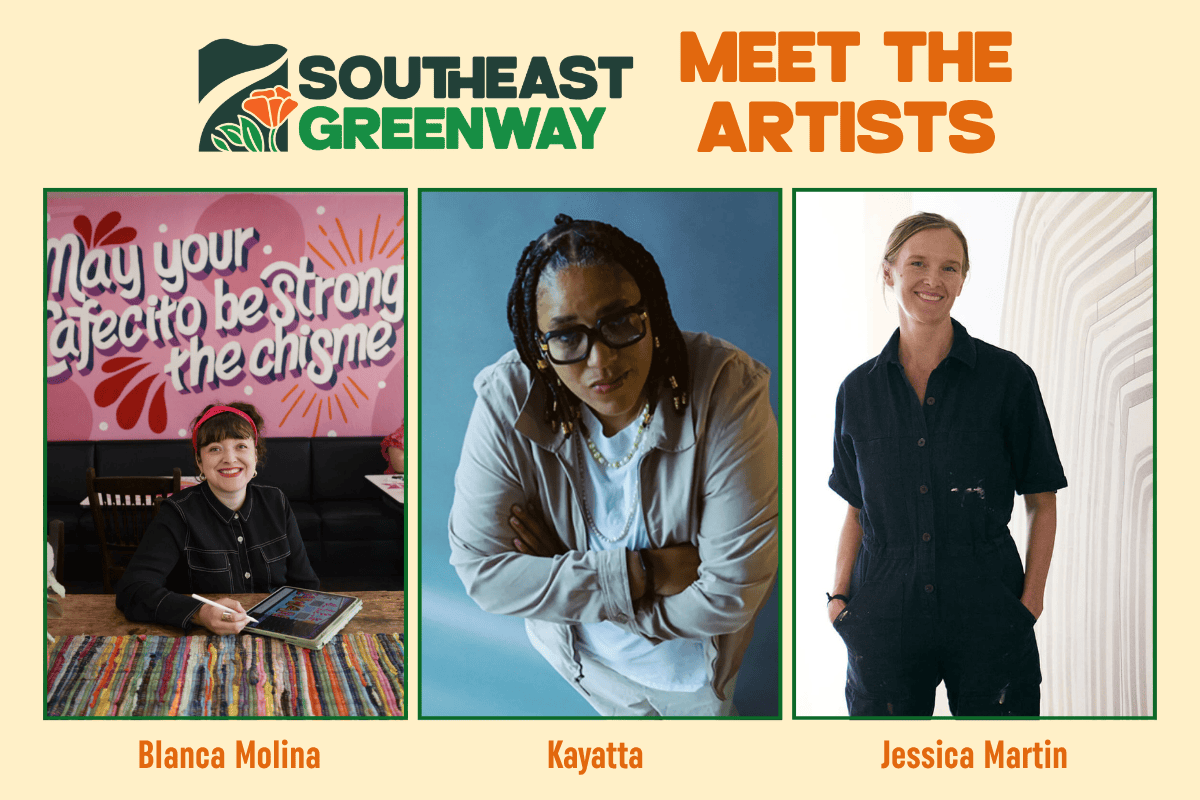
    Jessica Martin– A multi-disciplinary artist based in Northern California, her work explores our continual process of growth and healing, and the ways we find joy and strength through connections with nature, one another, and ourselves. She studied anthropology at Vassar College and received her MA at California College of the Arts. She has been Artist in Residence for Google, and had her work shown in exhibitions across the Bay Area and abroad. She has been a guest on Full Expression Podcast and co-hosted the Headspace Podcast to talk about creativity as a tool for life. Her work has been awarded grants from the NAEA, Creative Sonoma, and California Arts Council. In 2022, she co-created “Peptoc,” the viral hotline of encouragement featuring life advice from elementary students. She’s also the founder and director of Roving Venue (RV), an itinerant gallery that produces innovative community-based public art projects in rural Sonoma County. Martin also serves as lead teaching artist and arts program curator for West Side Elementary in Healdsburg. 

    Jessica will collaborate with Kimzin Creative to lead multimedia park-building workshops that invite participants to imagine, design, and build their dream park. Current workshops are being presented in partnership with the Children’s Museum of Sonoma County, Chop’s Teen Club, and Becoming Independent, engaging participants through hands-on creative activities that help bring their ideas for the Southeast Greenway to life. 

    Follow her on Instagram @jessicamartinart 

    Kayatta– An American rapper, poet, producer and educator who grew up in West Oakland, she was recently crowned best Hip Hop artist in Sonoma County. Kayatta continues to push the envelope socially, creatively, and dutifully by effortlessly fusing poetry with drums and bass to create sonic goodness that seethes with audacious honey. Her sound is hers alone and rooted in telling a story that is authentic, reflective, black, queer, joyous, engaging, and inspiring. Currently residing in Berkeley, California, she has found a refreshing way to utilize poetry that centers youth voices and impacts social and communal change through musical compositions that are relatable, uplifting, and thought provoking.  

    Kayatta will be working with Kimzin Creative to lead poetry/spoken world workshops in collaboration with Latino Service Providers, and other community organizations to be announced. 

    Follow her on Instagram @kayattamusic 

    Blanca Molina– An award-winning graphic designer, illustrator, and muralist based in Sonoma County. Blanca was raised in Northern California after moving here from Guadalajara, Mexico when she was five. Her creative practice is shaped by both her Mexican heritage and her California upbringing. She holds a B.S. in Graphic Design from Sacramento State University and brings over a decade of expertise in visual storytelling, packaging design, and brand identity. Her work has been recognized by the Anthem Awards, Graphic Design USA, and the Wine Packaging Conference. Alongside her client work, Blanca creates illustrations and artwork inspired by Mexican culture and iconography, blending traditional influences with the color, energy, and spirit of growing up in California. Whether designing a brand, creating an illustration, or painting a mural, her work is rooted in joy and connection—designed to evoke happiness, nostalgia, and creativity while encouraging people to connect with one another. Notably, Blanca is also the designer behind the Southeast Greenway’s new logo! 

    Blanca will be working with Kimzin Creative to design large-scale bilingual graphics inviting community to “Dream With Us,” along with Lotería-inspired conversation cards exploring park values, amenities, and community ideas. 

    Follow her on Instagram @blancacreative

  • Meet the Community Engagement Teams

    Meet the Community Engagement Teams

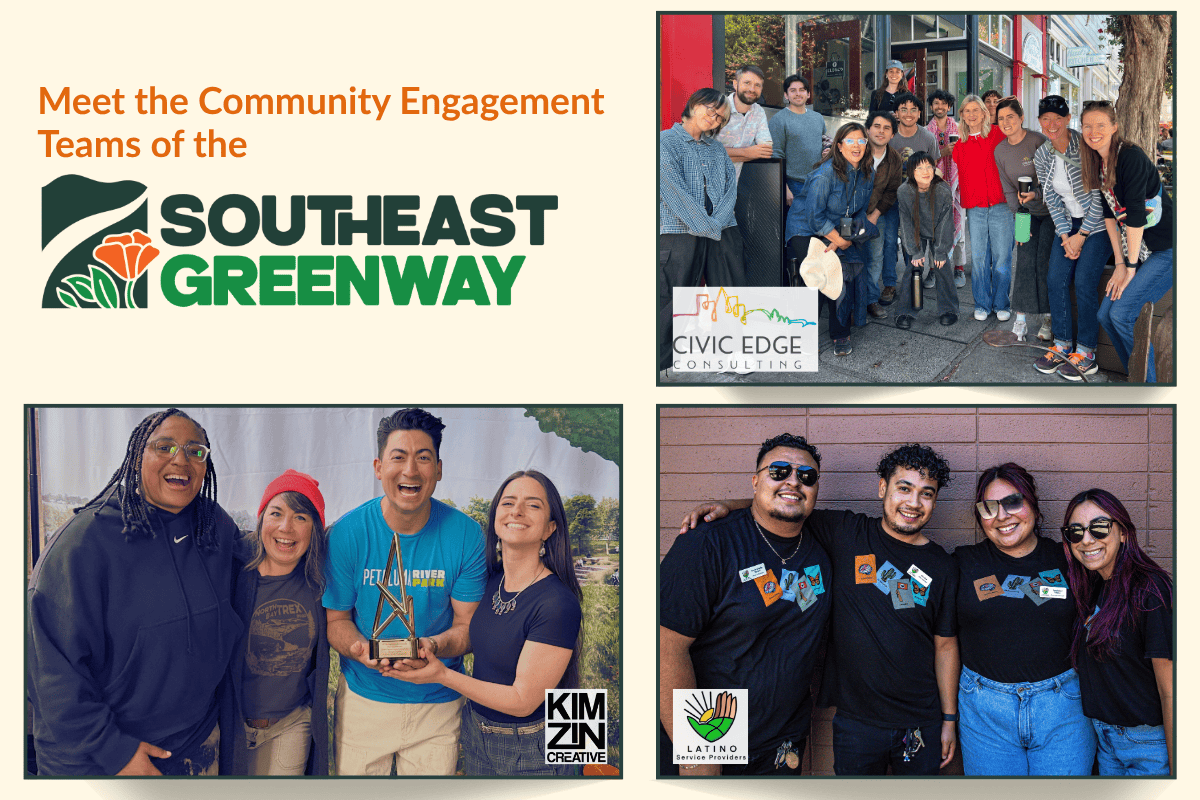
    Community involvement is an important part of the Southeast Greenway’s planning process. As we move into the next chapter of creating a park for the community, with community input, we’re excited to be working with a number of organizations on outreach. These organizations will help us reach different community members across Santa Rosa and Sonoma County for input into the future Southeast Greenway park.   
     
    Civic Edge Consulting – They led outreach and engagement in Sonoma County supporting projects related to transportation, housing policy, and wildfire resilience. As a women-owned, employee-led firm, they focus on empowering communities through authentic community engagement and responsive communications towards the public. 

    Kimzin Creative – Believing joyful futures are created by, for, and with community, they will lead creative and arts-based engagement for the Southeast Greenway master planning process using the arts to unleash the creative capacity of Santa Rosa’s diverse communities and inform the design, programs, and operations of the new 47-acre park. Their work creates welcoming spaces where communities historically excluded from placemaking can come together to dream, imagine, and shape what’s possible. As a Petaluma-based arts and equity consulting group, with recent contributions to Santa Rosa’s General Plan Update, Kimzin Creative brings trusted relationships and deep knowledge of the region’s vibrant communities to the project. 

    Latino Service Providers (LSP) – Serving as a bridge across generations in the Latinx community and working to improve access to healthcare, mental health services, education, legal support, and other social services, LSP will be helping with connecting the Latinx community during the next phase of the Greenway project. They will be conducting outreach activities such as tabling at open houses and other events to reach Spanish speaking neighbors near the Greenway, and across Santa Rosa.  

     We’re excited to be partnering with these organizations to engage with the diverse communities living within Santa Rosa and Sonoma County! 

  • New City Leadership for SEG

    New City Leadership for SEG

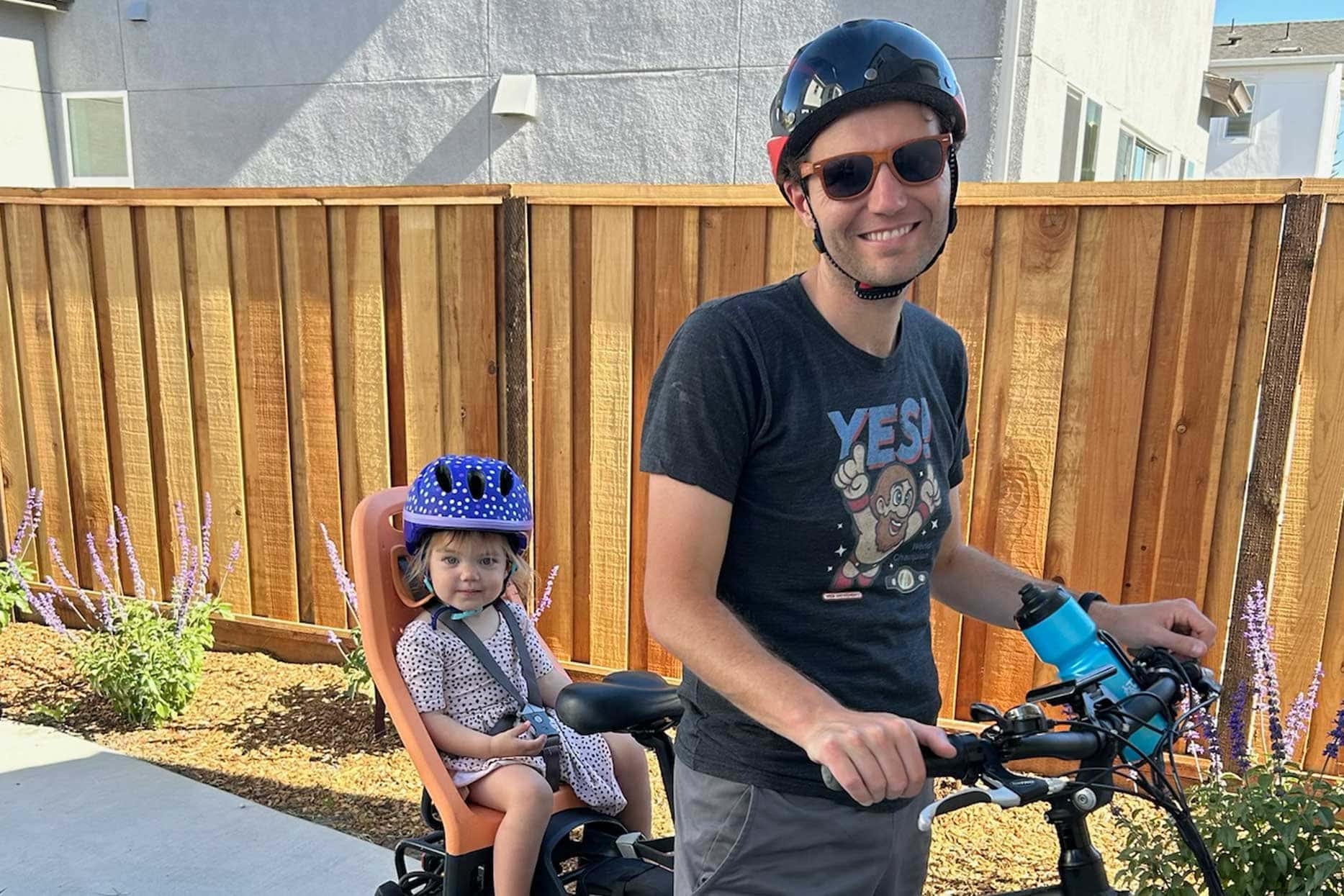
    Getting to Know Dan Hennessey: Santa Rosa’s Director of Transportation and Public Works

    After a challenging budget crisis and major reorganization over the summer, the City of Santa Rosa made a strategic leadership shift: the Southeast Greenway will now be managed by Dan Hennessey. An energetic leader with a hands-on approach, Dan brings experience in urban planning, active transportation, and large-scale infrastructure projects. After joining a Guided Walk on the Greenway, Dan shared his perspective about the project.

    Q: What stands out to you about the property?

    A: What really stands out is how different this park is going to be. It’s linear, stretching across neighborhoods, and the natural landscape really defines how people will experience it. As we walked from west to east, I noticed that the western sections offer a lot of flexibility—space for programming, access points, and opportunities for various park elements. The eastern sections are more constrained: there are dense strands of trees, hills, and some narrow pinch points that will shape what’s possible.

    Even as the master plan develops, I’m thinking about ways to start activating the park sooner rather than later. The city is always in need of places where people can gather, recreate, and connect with each other. If we can find ways to get people out on the property safely, enjoying it, that’s a real win. This is something we can start doing while the larger plan continues to take shape.

    Q: Have you worked on a project like this before, or something similar?

    A: Before moving to Santa Rosa, I worked in Austin, where one of the major projects I was involved with was the Waller Creek Greenway—a 25-block downtown linear park connected to a major tunnel and flood-control project. That project was complex: it required significant infrastructure improvements, coordination across multiple city departments—parks, transportation, public works, planning—and extensive public-private partnerships and fundraising.

    The key insight was how urban design can reshape the way people interact with a space. We shifted developments so that instead of turning their backs to the creek, buildings faced it. That natural activation of the space—just putting people in it, giving them a reason to be there—created a vibrant, usable park.

    It was also a lesson in phasing. The project took roughly 20 years from conception, but we didn’t wait for every single piece to be perfect. We implemented elements as soon as we could. That taught me the value of moving forward thoughtfully but proactively, finding opportunities where resources and staff availability allow, and balancing short-term wins with long-term planning.

    Q: The Bicycle Coalition named you a Civic Bike Leader for 2025. They wrote, ‘Director Hennessey blew us out of the water with his laser-like focus on systemic infrastructure changes that decrease the ability of drivers to drive at unsafe speeds and that separate cyclists and pedestrians from vehicles.’ Can you talk about some of the ways we can make infrastructure safer?

    A: Safety is built into everything we do, and it doesn’t compete with other priorities. Often, that means redesigning streets to slow traffic and create clear, separated spaces for cyclists and pedestrians. Narrowing lanes, tighter turns, and well-designed bike lanes reduce risks without creating congestion. My goal is simple: I want to eliminate crashes that result in fatalities and serious injuries. People make mistakes, and if we can make those mistakes survivable for drivers, cyclists, and pedestrians alike, we’re doing our job.

    Projects like the Southeast Greenway are part of this vision. They provide off-street paths connecting neighborhoods, giving people safe alternatives and activating properties along the route. Even short walks or casual rides help create a culture of safe, active transportation.

    Q: You’ve been described as someone who “gets things done”. How does that mindset shape your approach to running the Transportation and Public Works Department?

    A: I spent 13 years as a consultant helping municipalities plan, design, and program improvements. I also spent three years in Austin with the city government, where I often encountered very cautious decision-making. My philosophy is that it’s okay to make mistakes in service of helping people. You don’t have to be 100% right—95% right is enough, and the occasional error is part of learning. Admit your mistake and move forward.

    When I started in Santa Rosa, there were funds sitting idle on projects with no viable path forward. Over the last year, we reallocated eight figures worth of that money to projects that could actually deliver improvements. It’s not flashy, but it’s practical problem-solving: making sure resources don’t sit unused while the community waits for progress.

    Q: How does the Southeast Greenway fit into the larger picture for Active Transportation in Sonoma County?

    A: It’s a huge opportunity. Multiple miles of off-street paths connect neighborhoods, offer alternatives to congested streets, and activate adjacent properties. Even if people just walk their dogs or take an evening stroll, having people in the park reinforces its value.

    It also ties into a larger citywide and regional network—eventually connecting to Sonoma, Sebastopol, and neighborhoods across the city. This isn’t just a recreational asset; it’s a transportation asset. It changes how people navigate the eastern side of the city, where creeks and hills make connections tricky. The Greenway can give people more choices in how they move around and experience their neighborhoods.

    Q: On the Guided Walks, people often ask if we could just build the bike path first, even as other parts of the park are planned. How do you approach balancing early activation with long-term planning?

    A: Every decision to activate a portion of the park becomes an input to the master plan—it informs and constrains future options. But we shouldn’t let the perfect be the enemy of the good. Even small interventions—benches, public art, or a playground—can start getting people into the space, and that has benefits for the community while the broader plan unfolds. It’s about being strategic and intentional, balancing early engagement with careful design.

    Q: What role can community groups like ours play in helping the City succeed on projects of this scale?

    A: Community energy and advocacy are critical. Groups like yours know the neighborhood, the history, and the relationships. That knowledge helps staff engage effectively and ensure that planning and design decisions reflect real community needs.

    Building the Greenway is a long-term, multi-decade effort that will involve funding from many sources. Community groups can help us identify opportunities for grants, philanthropy, or future ballot measures. Early engagement ensures the project is viable. In short, you do a lot of the groundwork for us if we let you, and that support is invaluable.

    Q: Looking ahead, what excites you most about Santa Rosa’s transportation future in the next 5–10 years?

    A: We have alignment now—policy, funding, and community support—to make real changes. We’re transparent about what can and can’t be done, which helps build trust. Open communication with residents changes perspectives and creates partnership rather than frustration.

    What excites me is the ability to act. We’re no longer just fighting to define priorities; we’re figuring out how to implement them quickly and thoughtfully. That’s energizing—knowing we can make the city safer, more connected, and more enjoyable for residents, and do it in a way that balances vision with careful execution.